
Abigail Durham featured in Dezeen for MArch project La Tavola del Carmine

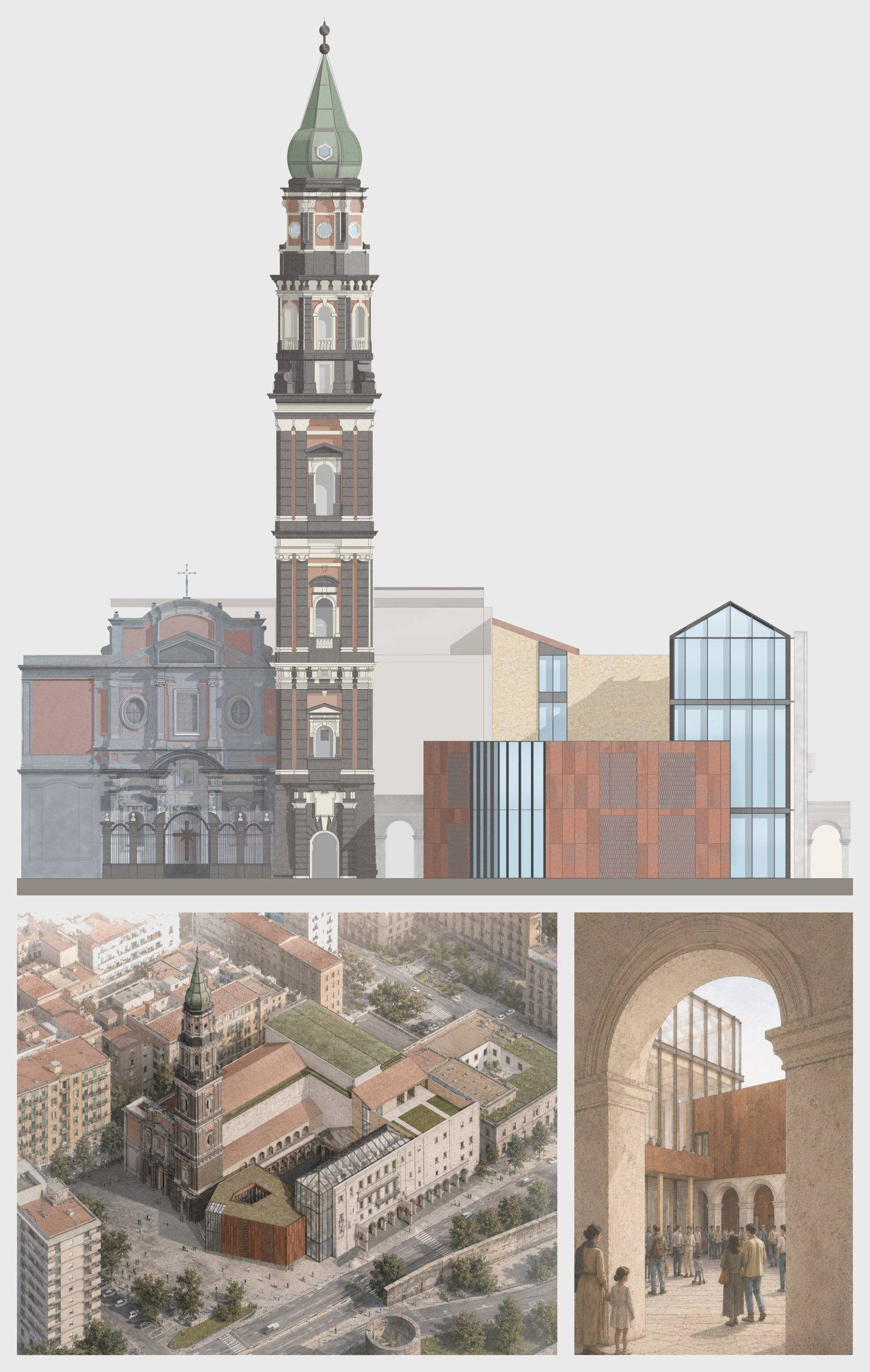
Image caption: Abigail from The BPG Team
Image caption: La Tavola del Carmine centres on the Basilica Santuario di Maria Santissima del Carmine Maggiore in Naples – Project
We are delighted to share that one of our own, Abigail Durham, has been featured in Dezeen for her MArch project, La Tavola del Carmine, designed with Abigail Gillbard at the University of Portsmouth.
The project appears in Dezeen’s School Shows series, which showcases work from architecture and design schools around the world – a genuine mark of recognition for the thinking behind it.
The project
La Tavola del Carmine centres on the Basilica Santuario di Maria Santissima del Carmine Maggiore in Naples, a building that sits between the city’s historic centre and its port. The basilica still functions as a place of worship, but the buildings around it have become spatially fragmented over time, leaving a complex that no longer works as a whole.
Abigail and Abigail’s response takes the idea of the shared table – la tavola – as the organising principle. Food and gathering become the drivers for reactivating the wider complex, using the most ordinary of social rituals to encourage exchange, draw people in and strengthen the site’s presence in the city.
Crucially, the proposal does not attempt to reinvent the basilica. It retains the building’s spiritual significance while creating spaces that invite new participation, allowing past and present to sit comfortably alongside one another.
The project was developed under tutors Guido Robazza and Dario Pedrabissi.
Why it resonates with us
What we particularly admire is the restraint.
It would have been easy to treat a fragmented historic complex as a blank slate. Instead, the project starts from what the place already means to the people who use it, and works outwards from there. The intervention is generous rather than loud, and the result is a building that gains a new life without losing the one it already had.
That instinct – understanding what a place means before deciding what it could become – is at the heart of how we approach existing buildings at BPG. Whether we are working on a listed structure, a tired commercial unit or a much-loved community facility, the questions are the same. What is worth keeping? What does this building do for the people around it? And what could it do next?
Adaptive reuse is often discussed in terms of embodied carbon and planning policy, and rightly so. But the social case matters just as much. Buildings hold memory, habit and meaning, and the best reuse projects protect those things while making room for something new.
Congratulations, Abigail
Seeing this level of thinking recognised by Dezeen is a real achievement, and we are proud to have Abigail on the team here in Dorking. Congratulations to both Abigail Durham and Abigail Gillbard.
You can read the full feature on Dezeen: Winery in abandoned cement factory among projects from the University of Portsmouth